|
|
Due
Diligence:
Don't take a job without it
By Nick Corcodilos |
When you're considering a job offer, how's your "due
diligence"? Do you do it in the job interview, or do you
actually spend some time researching the company in advance, so
you can form a clear judgment about it?
Most people research a prospective employer minimally. Some
go no farther than reading a want ad or a job description, and
asking the manager a few questions in the job interview...
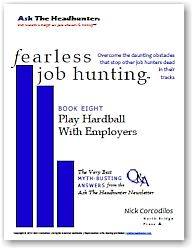 |
You've just read a short selection of
one of nine books that comprise Fearless Job
Hunting!
Due
Diligence: Don't take a job without it!
is now an enhanced section of
Ask The Headhunter
Fearless Job Hunting
Book
Eight: Play Hardball After The Interview |
Myth-Busting Answers For Fearless Job Hunters:
- Put the manager on notice
- Skip The Resume: Call the CEO
- Do they owe me feedback after an interview?
- What's the secret to the thank-you note?
- Avoid Disaster: Check out the employer
- How can I push the hiring decision?
- Playing hardball with slowpoke employers
- One interview stalled, one moving too fast
- Line up your next target
- Thanks is not enough
- Due Diligence: Don't take a job without it
- Judge the manager
- Get an answer at the end of the interview
PLUS:
8 How to Say It tips
PLUS: 4 sidebars packed with advice to give you the insider's edge!
Book
Eight: Play Hardball
After The Interview
LEARN MORE!
| "Nick
Corcodilos
is the brutally honest, forthright and insightful
headhunter who serves up tough love to job seekers
while taking job boards and others to the
woodshed." U.S. News & World
Report
|
|
Related article: Scuttlebutt:
Getting the truth about private companies
More Headhunter
Articles
The contents of this site are Copyright (c)
1995-2015 North Bridge Group LLC.
All rights reserved.
This material is for personal use only. Republication and redissemination,
including posting to news groups, is expressly prohibited without prior written consent.
Ask The Headhunter, Fearless Job Hunting, the ATH logo and other ATH titles are trademarks or registered trademarks of North Bridge
Group LLC and
Nick A. Corcodilos. |
User
agreement, legal information and disclaimer. |
|